Jonas Leichtle

Product design portfolio

I'm Jonas Leichtle, an MSc student at ETH Zürich. I focused on human-computer interaction in my bachelor's in Computer Science at KIT and in my master's. My bachelor thesis was published at ACM UbiComp '25.

Interaction design

Arbor

A browser extension concept for studying with AI chats. It labels each prompt as your own thinking or handed to the AI, and grows what you learn into a forest.

My role
Designed and built the interactive prototype.
Team
Six students, HCI course at ETH Zürich, 2026
Process
20 interviews, 4 insights, 10 concepts, prototype
Prototype
Wizard of Oz in React, with scripted answers so every participant sees the same thing
Open the prototypejonas6101.github.io/hci Opens in a new tab. Nothing you type leaves your browser.

The question

Students study with AI chats every day. A prompt can ask for an explanation, a check of your reasoning, or the finished answer. In the chat all three look the same, and you can't see how much of the thinking was yours.

What we heard

We interviewed 20 students about how they study with AI chats. Four insights came out of it, and each one led to specific concepts.

Delegation is invisible

After a good answer, it's hard to tell which ideas were yours and which were the AI's.

Led tothought linter, modeline, relabel in place

Judging gets switched off

Nudges that block or scold feel patronising. Students want to stay in control and in flow.

Led topredict → reveal, relabel in place, command line, squirrel

Learning scatters

What you learn is spread over dozens of chats, with no overview of what you know.

Led totwo views one tree, semantic zoom, drawn links

Forgetting shows up late

You notice what didn't stick only when you need it, usually the night before the exam.

Led toforgetting scrubber, predict → reveal

Hover over an insight or a concept to see how they connect.

Ten concepts and the principles behind them

Thought linter
Explainable feedforward
Modeline
Ambient awareness, calm technology
Predict → reveal
Desirable difficulty, generation effect
Two views, one tree
Multiple views, object constancy
Forgetting scrubber
Feedforward of consequences
Semantic zoom
Overview first, zoom and filter, details on demand
Drawn links
Brushing and linking
Relabel in place
User control, error recovery
Command line
Flexibility and efficiency, recognition over recall
Squirrel
Ambient presence, non-judgmental tone
For Arbor, we asked students how they think.

Interviews only capture what people notice about themselves.

In my bachelor thesis, I measured brain activity directly, with earphones.

It detects the moment someone falls asleep.

Field research

Pausing the podcast when you fall asleep

A field study of in-ear sleep detection with non-expert users at home, combining sensor data with interviews. Bachelor thesis at KIT, published at ACM UbiComp '25.

My role
Co-first author with Philipp Lepold. I built the sleep detection model and reworked the earpiece ergonomics.
Context
Bachelor thesis, Karlsruhe Institute of Technology
Methods
Field study at home, sensor logs, interviews, questionnaire, machine learning
Hardware
OpenEarable ExG, Apple Watch Ultra as reference

The question

Sleep is usually measured in a lab, with electrodes on the scalp and staff watching. That doesn't work at home or over weeks. Many people already fall asleep with earphones in. Could the earphones detect sleep and pause the podcast?

How I approached it

Most in-ear sleep research happens in controlled settings. We wanted to know how it works for non-expert users at home.

In the field

Tested in participants' own beds. They set up the earphones, watch and app alone, so the setup was tested too.

PrincipleEcological validity

Mixed methods

Sensor logs showed what failed. Interviews and a questionnaire explained why.

PrincipleTriangulation

Iteration

A noisy first recording round led to a flatter earpiece with an ear hook.

PrincipleIterative design

Evaluation

The model was tested on participants it hadn't seen, against an Apple Watch as reference.

PrincipleGeneralization to new users

A field study at home

  • 11participants
  • 15nights
  • 87.5 hof recordings

Participants wore an electrode in each ear, connected to an OpenEarable ExG board that streamed to a phone app, and an Apple Watch Ultra as the reference. No researcher was present. Afterwards we interviewed them and ran a questionnaire.

Iterating on the earpiece

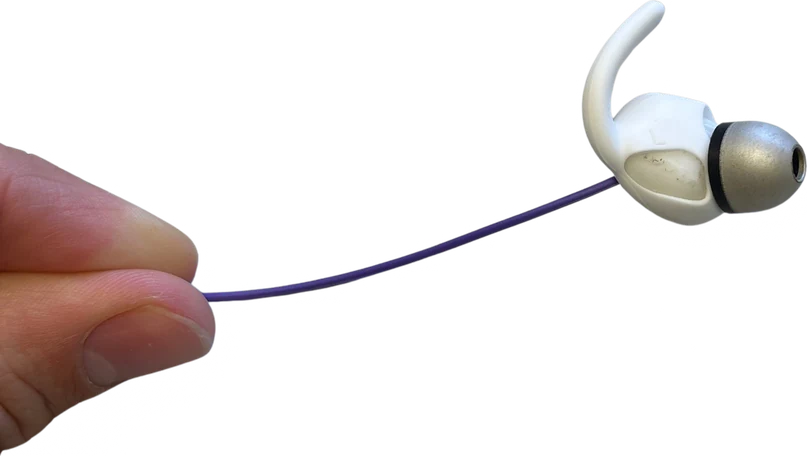
An earlier recording round was too noisy to train a model on. For this study the earpieces were made flatter, to be more comfortable, and got a silicone ear hook to stay in overnight. The tip is an off-the-shelf dry electrode in one size.

The 3D printed earpiece held between two fingers: a white body with a curved silicone ear hook and a grey electrode tip.

Sleep, visible in the signal

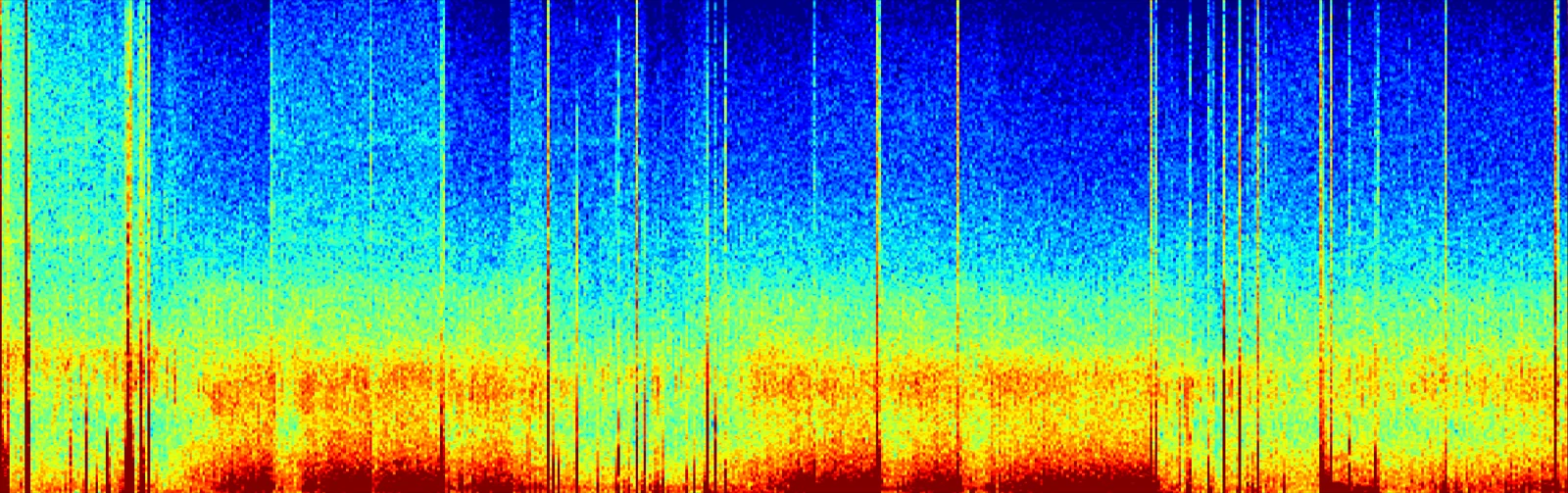
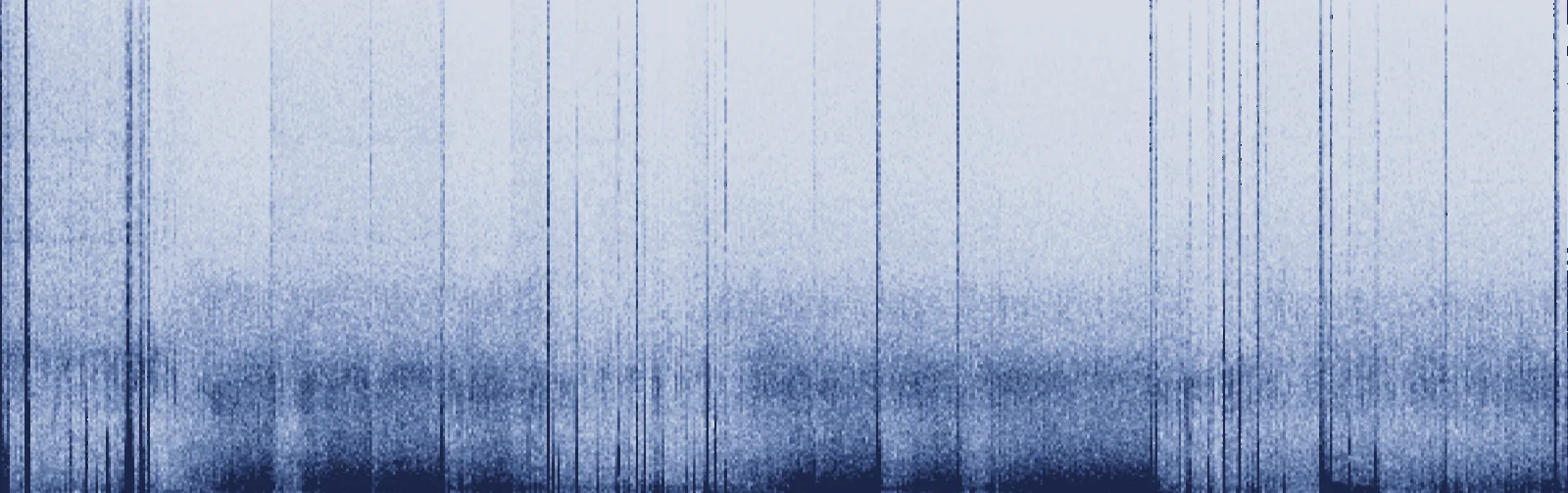
One night from the study, with sleep stages from the Apple Watch above and the spectrogram of the in-ear signal below. Low-frequency activity is strongest in deep sleep and drops during REM. Both views share one time axis, so each can be checked against the other.

Spectrogram of the in-ear signal from 0 to about 30 Hz over five hours. The band near the bottom, delta activity, is darkest during deep sleep.
AwakeAsleepDarker means more power. Hover or tap to see the original colors, where red means more power.

Evaluation

  • 90.5%accuracy for awake vs. asleep, on participants the model hadn't seen
  • 7.2 minaverage difference from the Apple Watch's sleep onset
  • 65.1%accuracy across four sleep stages

Sleep onset compared with the Apple Watch

Each bar is one recording. Left means our model detected sleep earlier than the watch, right means later.

Earlier than the watchLater than the watch

What the data and the interviews showed

Sensor data

  • Of 12,004 recorded segments, 7,099 were usable.
  • Most of the loss came from earphones falling out during sleep.
  • Movement caused only 2% of the rejected segments.

Interviews and questionnaire

  • 8 of 11 reported discomfort or pain, especially side sleepers.
  • Comfort was the top concern, and most would pick a different device because of it.
  • Privacy was generally not a concern.

Both pointed to the same problem, comfort.

What I'd change next

I'd start with comfort. Participants asked for better-fitting earpieces or the option to wear only one earphone. One earphone would need a new electrode setup, because the current one measures one ear against the other.

Uses participants suggested

  • Stopping media playback
  • Turning off lights and silencing notifications
  • Setting alarms
  • Detecting drowsiness while driving
Read the paperdoi.org/10.1145/3714394.3757253 Open access, ACM Digital Library. Opens in a new tab.

About

I'm doing an MSc in Management, Technology and Economics at ETH Zürich, graduating in 2028, after a BSc in Computer Science at KIT. In both degrees I've focused on human-computer interaction. I've interned at Amazon, ZEISS and IBM.

Publications